
Level 4 Body Armor: What It Stops, What It Weighs, and Level 3 vs Level 4
Level 4 body armor is the top of the NIJ rifle scale, and it’s the plate most buyers assume they need. Sometimes they do. Often they’re buying several pounds of extra weight to stop…
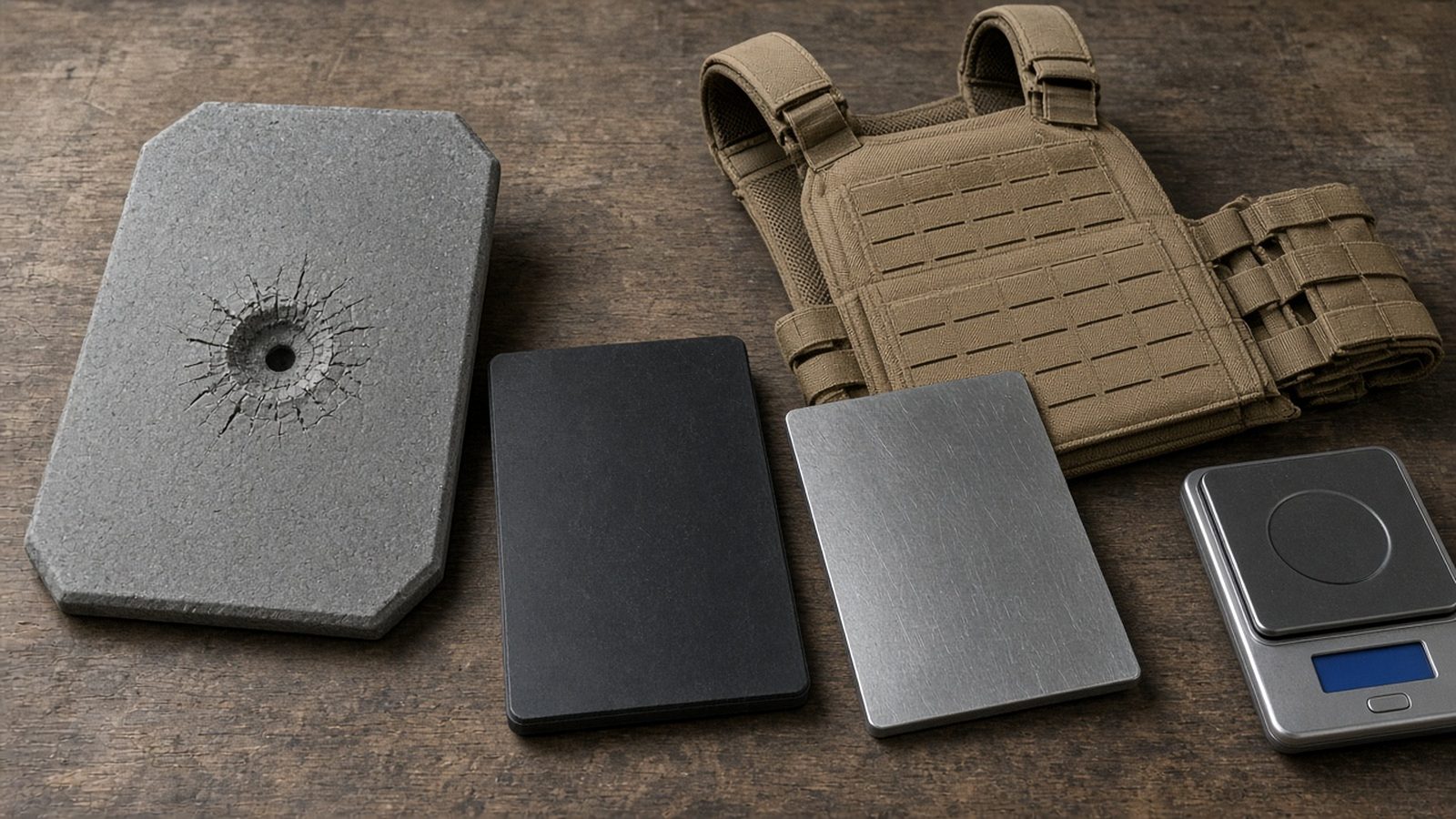
What this guide covers
- What level 4 body armor is tested to stop
- Level IV becomes RF3 under NIJ 0101.07
- Materials: ceramic, steel and polyethylene
- Weight, and what it does to you
- Level 3 vs level 4: how to choose
Level 4 body armor is the top of the NIJ rifle scale, and it’s the plate most buyers assume they need. Sometimes they do. Often they’re buying several pounds of extra weight to stop a round they’re unlikely to face, while giving up the speed and comfort that actually matter on a long day. This guide explains what level 4 plates are tested against, what changed with the new NIJ 0101.07 standard and its RF3 rating, how ceramic, steel and polyethylene compare, and how to decide between level 3 and level 4.
What level 4 body armor is tested to stop
Under the older NIJ Standard 0101.06, Level IV armor was tested against a single threat: a .30-06 M2 armor-piercing round, a 166-grain projectile with a hardened steel core, at about 2,880 feet per second. That’s a World War II-era military AP round, and it’s still the benchmark because few rifle threats in civilian life hit harder.
Because Level IV ratings are built around an armor-piercing round, a plate that passes will generally also stop common lead-core and mild-steel-core rifle rounds. But “generally” is doing work in that sentence. NIJ tests the threats listed in the standard, nothing else. Some Level IV plates have had trouble with very fast 5.56mm rounds, which behave differently from a heavy .30-06 bullet. If a specific threat matters to you, look for the manufacturer’s independent lab data on that exact round.
Level IV was also historically tested as a single-hit rating, in contrast to Level III’s multi-hit test. Many manufacturers advertise multi-hit performance beyond what NIJ requires. That data can be good. Just know it’s the maker’s claim, not the NIJ rating itself.
Level IV becomes RF3 under NIJ 0101.07
In October 2023, NIJ published NIJ Standard 0101.07 for body armor along with a companion document, NIJ Standard 0123.00, that defines the protection levels. The old names went away:
| Old level (0101.06) | New level (0123.00) | Rifle test threats |
|---|---|---|
| Level III | RF1 | 7.62x51mm M80 ball (2,780 ft/s), 7.62x39mm mild steel core (2,400 ft/s), 5.56mm M193 (3,250 ft/s) |
| (new) | RF2 | Everything in RF1, plus 5.56mm M855 “green tip” (3,115 ft/s) |
| Level IV | RF3 | .30-06 M2 AP, 165.7 grain (2,880 ft/s) |
The most useful change for buyers isn’t the RF3 name. It’s RF2. For years, people bought Level IV plates specifically because standard Level III didn’t have to stop M855 green tip, one of the most common 5.56 rounds around. RF2 fills that gap in the official standard. For a lot of buyers who were reaching for Level IV only for M855 coverage, an RF2 plate may be the better fit, usually with less weight.
You’ll still see “Level IV” on product pages for years. Plenty of plates on the market were certified under 0101.06, and that certification doesn’t vanish. Just know that RF3 is the same top tier under the new name. Our explainer on NIJ ballistic armor standards covers the soft armor levels (HG1, HG2) too.
Materials: ceramic, steel and polyethylene
Almost every level 4 plate on the market is ceramic. The reason is physics. Stopping a hardened steel penetrator takes something harder than the penetrator, and ceramics like alumina, silicon carbide and boron carbide are harder than steel. When the AP core hits, the ceramic shatters it, and a composite backer (usually polyethylene or aramid) catches the fragments and spreads the energy.
| Material | Typical rating | Weight (10×12) | Strengths | Weaknesses |
|---|---|---|---|---|
| Ceramic + composite | Level IV / RF3, also RF1–RF2 | Often about 5.5–8 lb for Level IV | Stops AP rounds; low spall | Can crack if dropped; shouldn’t be trusted after a hard impact without inspection |
| Steel (AR500 / AR550) | Level III / RF1 range | Often about 8–10 lb | Cheap, thin, durable, multi-hit | Heaviest; bullet fragments spall without a coating |
| UHMWPE (polyethylene) | Level III / RF1, some RF2 | Often about 3–4.5 lb | Lightest, floats, no spall | Thicker; not used alone for AP threats; heat-sensitive |
Weights vary a lot by cut, curve and manufacturer, so treat these as ballpark figures and check the spec sheet of the exact plate.
A note on steel, since this site covers coatings. Steel plates break bullets apart on impact, and the fragments spray outward toward your neck, arms and face. That’s spall. A thick polyurea or similar anti-spall coating helps trap fragments. If you run steel, a coated plate is non-negotiable. The same principle shows up in vehicle armor, which we covered in spall liners explained.
Weight, and what it does to you
A plate carrier with front and back level 4 ceramic plates, the carrier itself, and a basic loadout adds up quickly. Use the calculator below to see your total before you buy.
Armor loadout weight calculator
Turn this into a business
Want to apply ballistic coatings yourself?
Get equipment options, training dates and realistic startup costs from a coatings specialist. Free, and it takes about a minute.
- Equipment matched to your budget
- Hands-on training availability
- Markets that fit your area
Step 1 of 4 · About 60 seconds
Get your free startup plan
You're on the list.
A coatings specialist will reach out within one business day with equipment options, training availability and startup costs for your market.
Keep reading
Related articles
Vehicle Spall Liners vs Add-On Armor Plates: What Each Is For
Armor plates are meant to stop threats. Spall liners are meant to catch the fragments that break loose behind a struck surface. Here is how the two roles differ, where spray-applied liners fit, and why none of them should be oversold.
Read article
Level 3A vs Level 3 Body Armor: Which One Do You Actually Need?
Level IIIA stops handgun rounds and can be worn all day. Level III stops rifle rounds and weighs a lot more. Here is how the two ratings differ, what the newer NIJ labels mean, and how to choose.
Read article
Safe Room Construction: Building a Room for Storms, Intruders or Both
Tornado shelters and ballistic safe rooms follow different standards and solve different problems. Here is how each is built, what standards apply, and how to combine them.
Read article