Spall Liners Explained: How They Protect Vehicle Crews
What spall is, how spall liners catch behind-armor debris, how aramid, UHMWPE, and glass liners compare, and where polyurea coatings fit.
What this guide covers
- What Is Spall?
- What a Spall Liner Does
- Common Spall Liner Materials
- Spall Liners in Blast Environments
- Where Polyurea and Other Coatings Fit
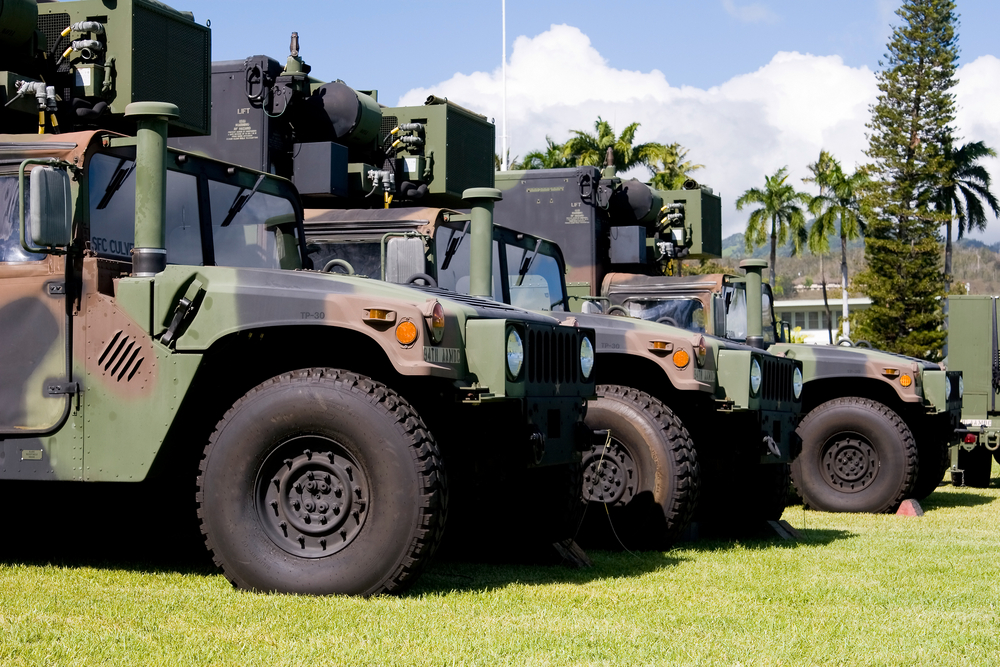
When people think about vehicle armor, they picture the outer plate that stops a round or a fragment. Some of the most important protection inside an armored vehicle sits behind that plate. A spall liner is a secondary layer mounted on the interior side of the armor, and its job is to catch the fragments that break loose when the outer armor is struck. This guide explains what spall is, how liners work, which materials are used, and where coatings fit in.
What Is Spall?
Spall is material that breaks off the back face of a structure when the front face is struck hard. In armor, it can happen in two ways:
- Without perforation. A heavy impact or blast sends a stress wave through the plate. When that wave reflects off the back surface, it can tear flakes of metal or concrete loose even though nothing passed through.
- With perforation. When a projectile does defeat the armor, it pushes out a cone of plate fragments and its own broken pieces. Defense researchers call this behind-armor debris.
Either way, the people inside are exposed to high-velocity fragments that can cause injury even when the original threat did not fully penetrate. The word is also used in construction, where concrete spalling describes surface breakup from corrosion or freeze-thaw cycles. In this article we mean the ballistic and blast sense.
What a Spall Liner Does
A spall liner is a layer of tough, energy-absorbing material fixed to the inside of the vehicle hull or crew compartment. It does not replace the primary armor. Instead, it works in two ways:
- It catches fragments. Many spall fragments are slowed or stopped entirely by the liner.
- It narrows the debris cone. Fragments that do get through are concentrated in a smaller area instead of spraying across the compartment. Manufacturers and researchers describe this as reducing the spall cone angle. A narrower cone means fewer crew members and less equipment in the path.
The U.S. Army has treated liners as a crew survivability item for decades. A Live Fire Test and Evaluation report on the M113A3 armored personnel carrier spall liners, available through the Defense Technical Information Center, notes that spall liners “can have a significant impact on armored vehicle crew casualties and system vulnerability.” That report compared Kevlar and S-2 Glass liners in side-by-side live fire tests to determine whether the two materials performed equivalently.
Common Spall Liner Materials
Spall liners are generally made from fiber-reinforced composites. The main families are:
| Material | Characteristics | Typical trade-offs |
|---|---|---|
| Aramid composites (for example Kevlar) | Low density, good toughness, good fire and smoke performance | Sensitive to moisture and UV if not protected; well proven in service |
| Ultra-high molecular weight polyethylene (UHMWPE) | Very low density and high ballistic efficiency for its weight | Lower heat tolerance than aramid or glass; may need fire-retardant facings |
| Glass fiber composites (E-glass, S-2 Glass) | Higher density, strong and stiff, can serve a structural role | Heavier for the same protection; often lower material cost |
Composite armor manufacturers commonly describe UHMWPE as offering the largest reduction in spall cone angle for a given mass, and aramid as effective in overmatch situations, where the outer armor is defeated. Glass composites are valued where the liner also needs to carry load. The choice depends on available space, weight budget, fire requirements, and the threats the vehicle is expected to face.
Researchers explored aramid liners as armor augmentation as far back as the 1980s. One paper, Aramid Liners as Armor Augmentation, suggested that spaced aramid liners could be more effective than a single liner of the same weight, while noting that test data at the time was still limited.
Spall Liners in Blast Environments
Mine and IED threats changed vehicle design during the conflicts in Iraq and Afghanistan. Underbody blasts load the floor and hull, and the shock can produce spall even without a breach. The Defense Systems Information Analysis Center has a state-of-the-art report on underbody blast protection for ground combat vehicles that describes how protection technologies are assessed through testing and modeling. Interior liners, energy-absorbing seats, and floor designs all work together; no single layer handles the whole problem.
For a broader overview of how spray-on materials have been used on military vehicles, see our article on spray-on armor for military vehicles.
Where Polyurea and Other Coatings Fit
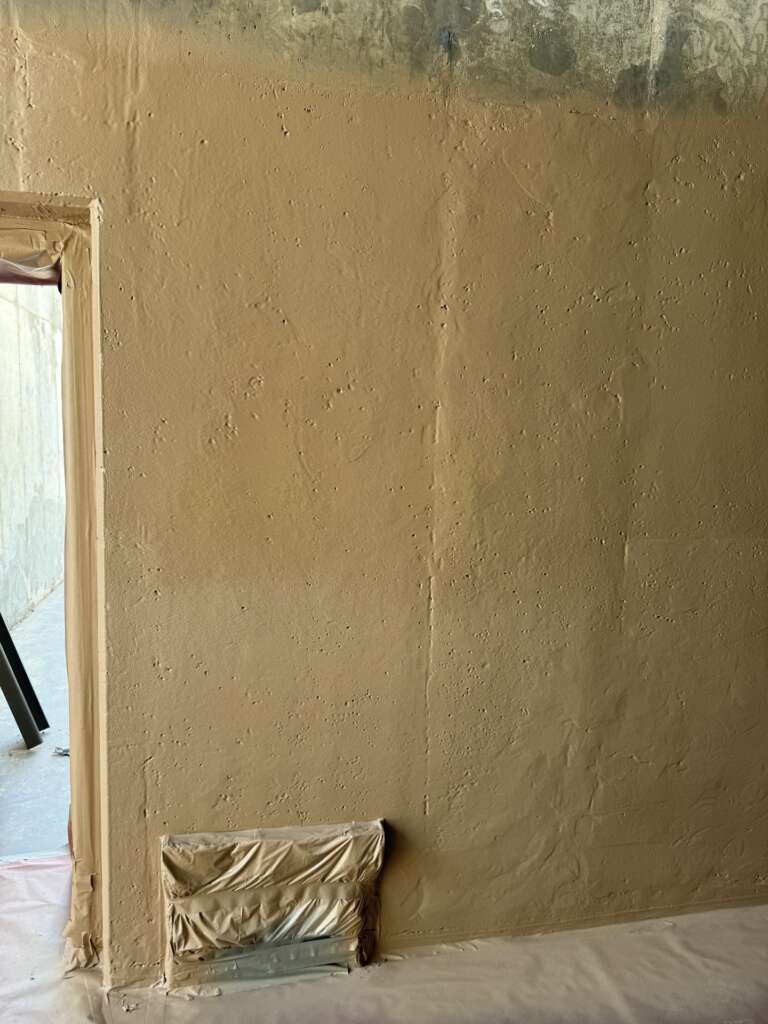
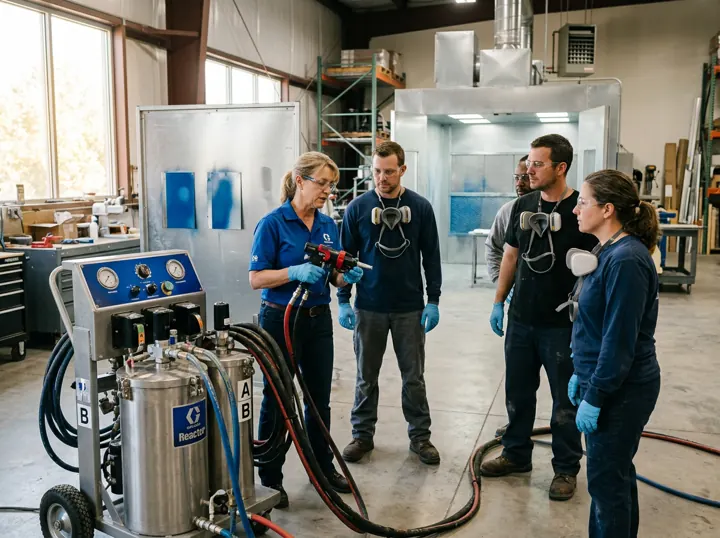
Polyurea is a fast-curing elastomer that is sprayed on as a liquid and sets into a tough, flexible membrane. It is best known as a truck bed liner and industrial lining, but it has been studied for protective uses because of its ability to stretch a great deal before tearing.
There are two distinct protective roles:
- Fragment containment on walls and structures. Air Force Research Laboratory testing at Tyndall Air Force Base showed that an elastomer sprayed on the interior face of concrete block walls and lightweight structures could hold wall fragments together during an explosion instead of letting them fly into the room. We cover that research in our article on polyurea blast retrofits for walls.
- Layered armor. Naval Research Laboratory scientists published work on elastomer-steel laminate armor in Composite Structures (2010), studying how a polyurea layer bonded to steel plate changes resistance to penetration. Their work and later studies found that the position of the coating matters, with the strike-face placement giving the benefit.
It is important to be precise here. A sprayed coating is not a substitute for a purpose-built aramid, UHMWPE, or glass composite spall liner in a combat vehicle. Military liners are engineered, tested, and qualified as part of a specific vehicle armor package. What coatings can offer is fragment retention, abrasion and corrosion protection, and in some tested systems, a contribution to overall performance. Any protective claim should be backed by testing of the full system with the specific substrate and thickness used.
Spall Control Outside Vehicles
The same principle applies in buildings. UL 752, the U.S. standard for bullet-resisting equipment, fails a sample if spall from the protected side damages an indicator panel placed about 18 inches behind it, even if the bullet itself was stopped. That is why many bullet-resistant panels and glazing products include backing layers designed to retain fragments. Our guide to UL 752 levels explains the test in detail.
Common examples include:
- Polycarbonate layers on the protected side of laminated bullet-resistant glass
- Fabric or composite backers on steel and concrete barriers
- Fragment retention films on windows in blast-vulnerable buildings
- Elastomeric membranes on the interior face of masonry walls
Questions to Ask About a Spall Liner or Fragment-Retention Layer
- What threat was it tested against? A liner designed for fragment containment after overmatch is different from one meant to stop small-arms rounds.
- Was it tested with the primary armor it will be paired with? Liner performance depends heavily on what is in front of it and the air gap between them.
- What are the fire, smoke, and toxicity properties? Inside a crew compartment, these can matter as much as ballistic performance.
- How is it attached? Fasteners, adhesives, and edge treatments affect both performance and maintenance access.
- How does it age? Moisture, UV, heat, and abrasion degrade some materials faster than others.
Key Takeaways
- Spall is fragment ejection from the back face of armor or structure, with or without perforation.
- Spall liners sit behind the primary armor to catch fragments and narrow the debris cone.
- Aramid, UHMWPE, and glass composites are the main liner materials, each with weight, heat, and cost trade-offs.
- Elastomeric coatings such as polyurea have a documented role in fragment containment on walls and have been studied in layered armor, but they do not replace a qualified vehicle spall liner.
- Spall control is part of building standards too, which is why UL 752 checks for fragments behind the sample.
For more on the physics of impact, see our pages on terminal ballistics and ballistic testing.